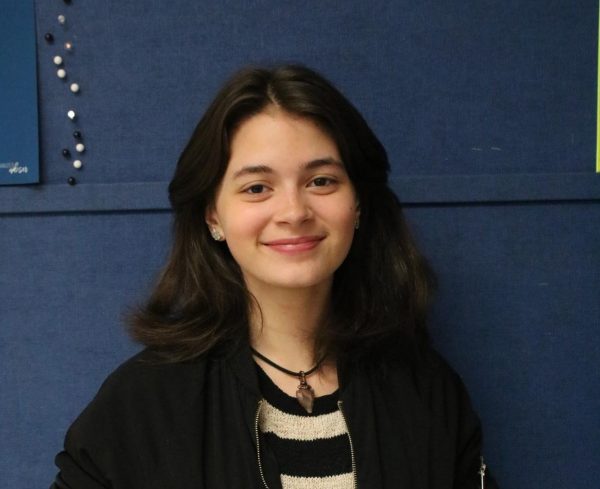


The volleyball team steps out onto the court—a clear formation at the ready. The players exchange assuring glances and huddle around senior Marlee Brown, taking a deep breath before stepping up to deliver the first serve. Together, they have been practicing for this game since before tryouts at the start of the school year—but for Brown, life had other things in store.
Just before beginning her senior year at Cy Creek, Brown began to experience a string of abnormal health symptoms. What started as a sore throat quickly became cause for concern, as Brown soon developed severe chest pains as well, involving multiple visits to urgent care that only resulted in further alarm.
“Every test they took kept coming back negative, and at that point I just wanted to know what I had and what was wrong,” Brown said. “Normally a negative test is a good thing, but when you don’t know what could be going on, it just becomes frustrating.”
The symptoms only worsened as time went on, eventually reaching the point where she went to the emergency room and was later admitted in to the intensive care unit (ICU) on overnight watch. It was there that she was diagnosed with Lemierre’s Syndrome, an incredibly rare infection of the upper respiratory system that only affects about one in a million people annually.
“Basically, it’s a blood clot on your jugular vein that can eventually reach your brain,” Brown said. “The doctors said not to look it up, because apparently I wasn’t textbook to the typical Lemierre’s [because] for me, it was killing everything—my kidneys were failing, my liver was failing and my heart was struggling to keep up.”
In addition, Brown’s specific case led her to develop additional life-threatening complications including: COVID-19, acute kidney failure, severe dehydration, intense rigors, a blood infection, pneumonia and sepsis.
“At that point I just wanted to die—I remember looking up and thinking of all the people I’d meet in heaven,” Brown said. “But I told myself, ‘If I’m not going to fight for me, I’m going to fight for my older sister and my family. There’s people who love me that still want me to be here, and this is not the end, no matter what the doctors say.’”

Brown spent a full week in the ICU before she soon began to show signs of improvement in eating and moving around. After another week in recovery, Brown was performing completely normal, much to the hospital’s astonishment.
“I should not be here,” Brown said. “I should be dead, but God saved my life. The doctors told me, ‘Science can’t explain this.’ But that’s because it’s not science, it’s God. There’s no other way to explain it. Doctors don’t get the last say, no matter how much they might think they do—it’s all God.”
Despite a late start to her senior year, Brown was able to jump right back into her classes and onto the volleyball court just in time for the season. As of now, she is heavily involved in Creek’s blood drives and the field of health science, where she is looking to pursue a potential career in optometry.
“I’ve always wanted to be in the medical field,” Brown said. “But I think just having good doctors also made me realize I wanted to help people. Learning all of this about myself while I was in the hospital was really helpful; the doctors would be discussing different medical terms and I’d be able to recognize them and know what they were talking about.”
Now fully recovered and more confident than ever, Brown is looking forward to graduating in May and starting the next chapter of her life.
“After going through that, I’m just so proud of my body and how far I’ve come,” Brown said. “And I’m so grateful that I was able to play during my senior season. This experience was the worst and the best thing that could have ever happened to me.”